In recent years, the demand for Cat Collar and Leash Sets has surged. Pet owners increasingly recognize the importance of outdoor adventures for their feline friends. According to a recent survey by the Pet Products Association, 47% of cat owners now prioritize outdoor safety and style when selecting accessories. This shift highlights an evolving understanding of pet well-being.
Dr. Emily Carter, a renowned expert in feline behavior, emphasizes the significance of leash training. "A Cat Collar and Leash Set can transform outdoor exploration into a safe and enjoyable experience for cats," she notes. As more cat owners seek innovative ways to engage their pets, the market responds with diverse options.
However, not all cat collars and leashes are created equal. Some designs can cause discomfort or irritation. It's crucial for pet owners to choose items that prioritize safety and comfort. Investing in quality gear ensures that cats can enjoy their outdoor experiences without stress. The growing industry reflects both the positive trends and the need for awareness in product selection.
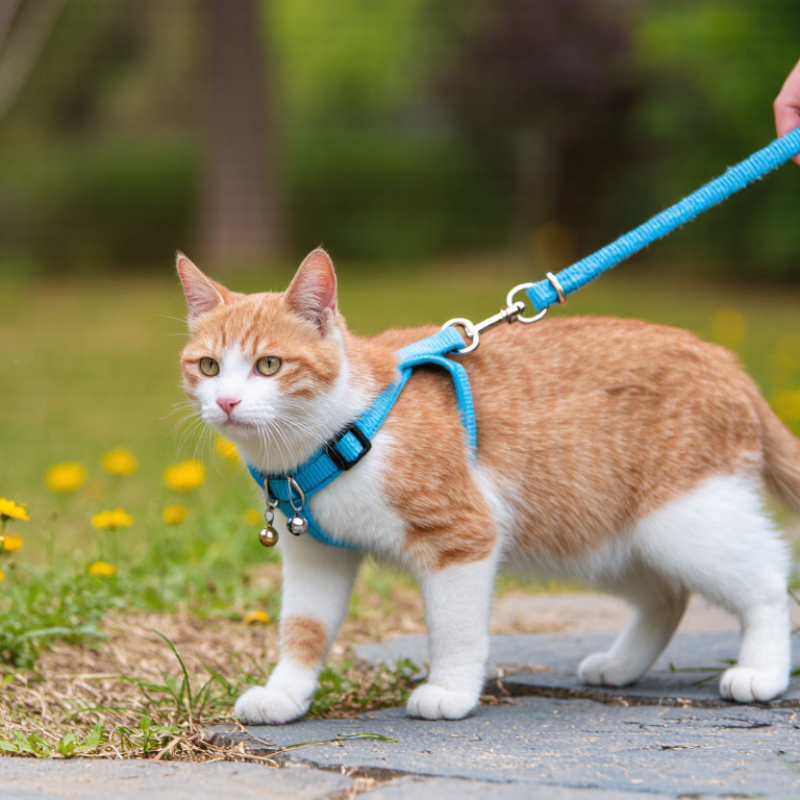
A cat collar and leash set is a group of walking and identification accessories designed for feline use. The core components usually include an adjustable collar, a leash, and connecting hardware. Many practical sets also include a harness, because a leash should not pull directly against a cat’s throat. A breakaway buckle can release under strong pressure, while an identification ring holds a tag securely. Soft webbing, rounded edges, and lightweight clips reduce rubbing around the neck and chest.
The label is not perfectly standardized. Some sets contain only a collar and lead, while others add a harness, bell, or reflective strip. A set can look complete yet fit badly. Measure the cat’s neck and chest, then check whether two fingers fit beneath the material. The leash should offer controlled movement without sudden strain. FEDIAF’s 2024 European Pet Population and Industry Facts reported about 108 million cats in Europe in 2023. APPA’s 2023–2024 National Pet Owners Survey also estimated roughly 46.5 million U.S. households owned cats. These figures show a large user base, but they do not prove every cat needs outdoor equipment. Temperament matters. Some cats freeze, twist, or retreat when first wearing a harness. Short indoor trials are wiser than immediate outdoor use. The design should support comfort, identification, and measured control, not force exploration.
A cat collar and leash set usually combines a safety collar with a walking attachment. However, the collar should not carry pulling force. A harness is safer for leash training because it distributes pressure across the chest. The collar mainly supports identification and visibility.
The two-finger rule offers a practical welfare check. Slide two fingers between the collar and your cat’s neck. They should fit comfortably, without squeezing or creating a wide gap. A loose collar can catch on furniture, branches, or a paw. A tight collar may cause rubbing, swallowing difficulty, or stress. Choose a quick-release design, then inspect the skin beneath it every few days.
The rule is useful, not perfect. Long-haired cats, kittens, and cats gaining weight need more frequent checks. The PDSA Animal Wellbeing Report 2024 estimates that 11.4 million cats live in UK households. That scale makes simple preventive handling important. The American Pet Products Association’s 2023–2024 National Pet Owners Survey also estimates 46.5 million U.S. households own cats. Many owners may use collars casually, yet fit remains a welfare decision.
Tips: Introduce the collar indoors for short sessions. Reward calm behavior. Stop if your cat freezes, scratches repeatedly, or hides. Attach the leash to a well-fitted harness, not the collar. Recheck the two-finger space after grooming. I sometimes think “comfortable” is too subjective, so watch breathing, movement, and body language as well.
A cat collar and leash set combines a neck collar, a walking lead, and identification hardware. Its value depends on safety, not appearance. The American Pet Products Association’s 2023–2024 National Pet Owners Survey reported 46.5 million U.S. cat-owning households. That scale makes careful equipment selection important.
A breakaway buckle should release when a collar catches on a branch, fence, or furniture. Test it before use. It should open under firm pressure, but not during gentle movement. The collar must allow two fingers between the webbing and the cat’s neck. Too tight is dangerous. Too loose invites snagging.
Lightweight nylon or soft woven fabric usually reduces rubbing. Avoid rough seams, heavy charms, and elastic sections that stretch unpredictably. The leash should attach securely and remain short during outdoor training. Never pull a cat by the collar. A well-fitted harness is often safer for controlled walking.
An ID tag can help a lost cat return home. Keep it small, readable, and securely fastened. The PDSA Animal Wellbeing Report 2024 estimated 11.1 million pet cats in the United Kingdom, showing how many animals may need reliable identification. International Cat Care also warns that collars can create injury risks when poorly fitted. I would check the buckle and tag weekly. Small failures are easy to miss. Even experienced owners sometimes overlook worn stitching, which is why replacing damaged equipment matters.
A cat collar and leash set combines a neck collar, attachment point, and walking lead. The collar should use a breakaway buckle. It should release if caught on furniture or branches. A leash adds control during supervised outdoor time, travel, or veterinary visits. It is not a substitute for gradual training.
APPA’s 2023–2024 National Pet Owners Survey counted 46.5 million U.S. households with cats. That figure shows scale, not uniform needs. A lightweight kitten needs a smaller collar than a broad-chested adult. Measure the neck, then allow roughly two fingers of space. Too tight causes rubbing. Too loose may slip.
Small cats may suit short, lightweight leads and quiet indoor practice. Larger cats often need stronger stitching, but heavy hardware can still strain the neck. For many cats, a well-fitted harness is safer than leash pressure on the collar. The American Association of Feline Practitioners emphasizes low-stress handling, which supports slow introduction and reward-based training. Begin with minutes, not a full walk. Some cats never accept leash use. That is normal. Household averages cannot predict an individual cat’s comfort, confidence, or escape behavior.
A cat collar and leash set usually combines a breakaway collar, harness, and lead. The collar identifies the cat, while the harness spreads pressure across the chest. A collar alone can strain the throat during sudden movement. The 2023–2024 APPA National Pet Owners Survey estimated 46.5 million U.S. households owned cats. That scale makes practical safety guidance important, not decorative.
Start leash training indoors. Let the cat sniff the harness beside a quiet chair. Touch it briefly, then offer food. Increase wearing time slowly. A fearful cat may freeze, flatten its ears, or breathe quickly. Stop there.
The American Association of Feline Practitioners recommends reducing stress and supporting feline choice during handling. In my view, expecting every cat to enjoy outdoor walks is an error worth correcting. Some cats need enrichment at home instead.
Choose a soft, adjustable harness that permits two fingers beneath each strap. Check the fit before every session. Veterinary guidance commonly favors a breakaway collar, especially when cats climb or explore. Never attach a lead to the collar. A secure harness is safer, but it is not escape-proof. Test it indoors first. Keep the first outdoor session short, quiet, and supervised. Veterinary records, identification, and current preventive care also matter. The Centers for Disease Control and Prevention advises consulting veterinary professionals about animal health risks before outdoor activities. Mistakes happen; rushed training makes them more likely.
It commonly includes a breakaway collar, harness, and lead. The collar supports identification and visibility. The harness carries walking pressure.
Slide two fingers between the collar and your cat’s neck. They should fit comfortably, without squeezing. A wide gap signals possible slipping.
A harness distributes pressure across the chest. A collar can strain the throat during sudden movement. Never attach the lead to the collar.
Choose a breakaway collar. It can release if caught on furniture, branches, or a paw. Still inspect the skin regularly.
Start indoors beside a quiet chair. Let your cat sniff the harness, then touch it briefly. Offer food for calm behavior. Begin with minutes.
Stop if your cat freezes, hides, scratches repeatedly, or breathes quickly. Flattened ears also suggest distress. I may misread one signal, so watch the whole body.
Check the fit before each session. Inspect the skin every few days. Recheck after grooming, growth, or weight changes. Kittens need frequent adjustments.
No. Some cats never accept leash use. Quiet indoor enrichment may suit them better. A short, supervised trial is reasonable, but comfort matters more than expectations.
A Cat Collar And Leash Set is a practical combination of a neck collar, leash, and sometimes a harness or identification tag, designed to help owners manage cats during supervised outdoor time or travel. The collar should fit securely without restricting breathing or movement. A simple two-finger safety rule helps ensure that two fingers can slide comfortably between the collar and the cat’s neck. Breakaway buckles are especially important because they allow the collar to release if it becomes caught. Lightweight, non-irritating materials, visible identification, and strong but comfortable attachments can further improve safety.
Because cats vary greatly in size, age, temperament, and experience, the best equipment depends on the individual animal and its situation. In the context of APPA’s estimated 46.5 million U.S. cat households, many owners may benefit from choosing adjustable equipment suited to their cat’s body and behavior. Cats should be introduced to a collar, leash, or harness gradually indoors, using calm practice and positive reinforcement. A harness is often safer than attaching a leash directly to a collar, and veterinary guidance is recommended for cats that show stress, resist restraint, or have health concerns.