Choosing the right Pet Tags manufacturer involves more than comparing prices. Global buyers need dependable materials, clear customization options, consistent production, and responsive communication. China offers a wide range of suppliers, but capabilities can differ from one factory to another. A polished catalog can still leave important questions unanswered.
This guide introduces ten manufacturers for buyers exploring Chinese sourcing options. It highlights practical points to compare, including tag materials, engraving or printing methods, shape and color choices, minimum order quantities, sample availability, and export support. Small details matter. Check whether edges feel smooth, holes align with your preferred hardware, and text remains legible at the size you plan to order. Request samples where possible, then compare them with your specifications before placing a larger order.
Supplier information should be verified directly, since product ranges and production arrangements may change. Ask for current specifications, realistic lead times, and written confirmation of customization details. A sample may look excellent while a bulk run differs slightly; that risk deserves attention. It is also worth discussing packaging and quality checks before production begins. No shortlist can replace careful due diligence, and not every supplier will suit every brand. The aim is to help buyers ask better questions, assess trade-offs, and identify a manufacturer whose capabilities fit their product needs and order plans.
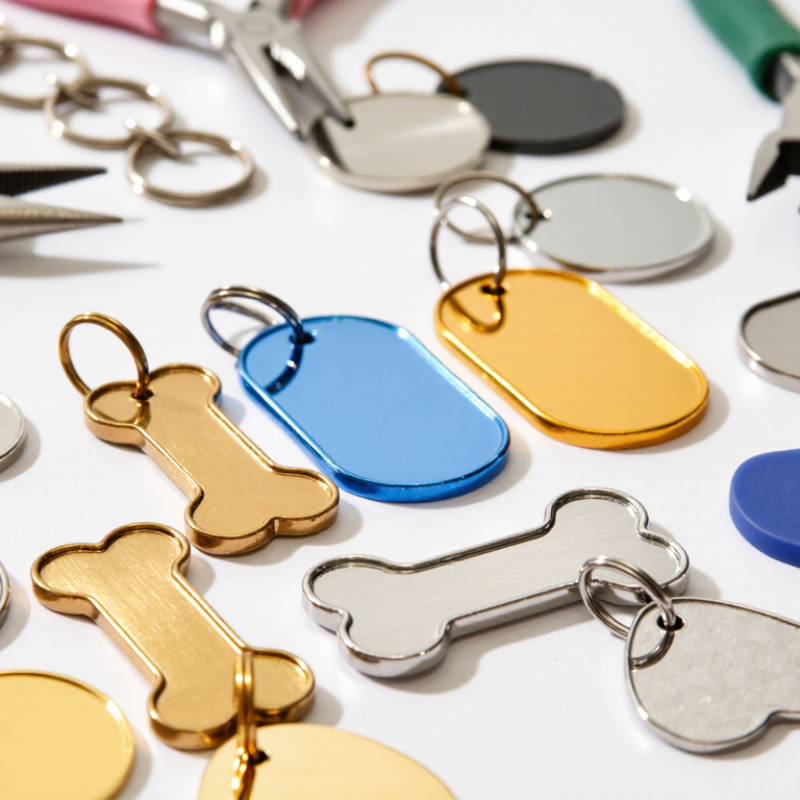
China’s pet tag manufacturing sector covers more than engraved metal discs. Common products include stainless-steel and aluminum tags, stamped plates, silicone tags, and printed identification labels. Factories may offer laser engraving, color printing, edge finishing, and custom shapes. Buyers also compare ring attachments, tag thickness, surface coatings, and legibility after repeated wear.
The American Pet Products Association reported that U.S. pet industry spending reached $152 billion in 2024, with a 2025 forecast of $157 billion. This figure covers the wider pet industry, not pet tags alone, so it should not be treated as a tag-market estimate. Still, it reflects a large consumer market for pet products. The category is less tidy than catalogs suggest: similar-looking tags can differ in engraving depth, coating durability, and noise against a metal collar buckle. Small details matter.
Tips: Request samples before placing a bulk order. Check whether small text remains readable, inspect the hole edges, and test the finish with ordinary handling. A polished surface may look premium but can scratch quickly. That is easy to miss. Ask suppliers for material specifications and a clear sample approval process, then confirm that production matches the approved sample.
China’s pet-tag manufacturers vary widely in material control, engraving quality, and production consistency. The American Pet Products Association reported U.S. pet-industry spending of $152 billion in 2024, with $157 billion projected for 2025. This is not a pet-tag sales figure, but it signals strong demand for dependable pet products. Buyers should assess a factory’s actual process, not just its catalog.
Request samples in the exact material, finish, and engraving style you plan to order. Check whether small text stays readable, edges feel smooth, and the ring attachment survives repeated pulling. Ask for written specifications covering metal type, coating, dimensions, and acceptable defect rates. Details matter. Ask how the supplier checks corrosion resistance and whether inspection records can be linked to production batches. A shiny sample can still hide uneven coating or weak attachments.
Review sample approval procedures, production lead times, packaging, and responses to defects. Ask for recent inspection reports and clarify who handles rework before placing a large order. Compare quotes carefully: a low unit price may exclude engraving setup, packaging, or stricter inspection. If possible, inspect a production run or hire an independent inspector. This adds cost, but it can reveal problems before shipment. One limitation remains: a factory audit captures one moment, not every shift or future batch.
China’s pet-tag manufacturing landscape offers global buyers a range of options, from lightweight aluminum discs to stainless-steel tags with deep engraving. A useful “top 10” list should be treated as a sourcing shortlist, not a ranking without transparent criteria. Compare material specifications, engraving samples, minimum order quantities, lead times, and inspection procedures. Ask for a production sample and check whether small text stays readable after handling. Small details matter.
Grand View Research’s 2023 Pet Accessories Market report estimated the global market at USD 9.2 billion in 2023 and projected a 6.2% compound annual growth rate from 2024 to 2030. This covers a broad accessories category, not pet tags alone, but it signals sustained demand for practical, personalized products. For supplier checks, request material declarations, batch records, and photos of finished tags beside a ruler. Confirm that edges feel smooth and the attachment hole suits the intended ring. Still, verify. A polished sample may not represent every production batch, and I would not rely on catalogue images alone. Clear specifications and repeatable quality checks make comparisons between Chinese manufacturers more dependable.
When comparing China’s pet tag manufacturers, start with the material and the way it will be used. Stainless steel resists everyday moisture, while aluminum keeps tags light and supports bright finishes. Brass offers a warmer look, but buyers should check how its surface changes with wear. Ask for samples with rounded edges and clear engraving. Small text can blur, especially on narrow tags. Test the actual artwork, not just a catalog image.
Customization means more than choosing a shape or color. Confirm engraving depth, attachment-hole placement, font limits, and whether each tag can carry unique text. Quality checks should cover sharp edges, legibility, finish consistency, and attachment strength. Request inspection photos or a sample from the production run. Details matter. Production capacity also needs evidence: ask about monthly output, lead times, order minimums, and how repeat batches are matched. A large stated capacity is less useful if communication slows during peak periods. I would not judge a supplier by a polished sample alone; real orders may reveal uneven lettering or color shifts. That risk deserves a direct question.
This is a practical comparison of 10 common supplier capability profiles, not a verified ranking of named companies. Capacity figures are indicative planning ranges, not audited production claims. Confirm current specifications, certifications, lead times, and capacity directly with each supplier.
| Supplier Profile | Common Materials | Customization Options | Typical Quality Controls | Indicative Monthly Capacity | Best Fit for Buyers |
|---|---|---|---|---|---|
| 1. Aluminum engraving specialist | Anodized aluminum; stainless-steel split rings | Laser engraving, color choices, shapes, single- or double-sided artwork | Artwork proofing, engraving legibility checks, edge and finish inspection, sample approval | About 20,000–100,000 pieces | Lightweight tags, promotional orders, and multi-color designs |
| 2. Stainless-steel tag producer | Commonly 304 stainless steel; some suppliers offer other grades on request | Laser marking, stamped or cut shapes, polished or brushed finishes | Dimensional checks, surface inspection, marking verification, material documentation on request | About 10,000–60,000 pieces | Buyers seeking durable metal tags and higher perceived weight |
| 3. Brass and plated-metal workshop | Brass and zinc alloy with plated or coated finishes | Raised or recessed details, custom outlines, plating colors, logo marks | Plating appearance checks, detail inspection, attachment and edge checks | About 5,000–30,000 pieces | Decorative designs and premium-looking gift or boutique ranges |
| 4. Silicone and soft-PVC producer | Silicone or soft PVC; specifications depend on the selected compound | Molded shapes, raised details, multiple colors, flexible loops or inserts | Color matching, molding-detail inspection, dimensional checks, odor and surface review | About 10,000–80,000 pieces | Flexible, colorful tags for everyday pet accessories |
| 5. Acrylic and plastic tag maker | Acrylic and other specified plastics | Printed or engraved graphics, cut shapes, transparent or opaque finishes | Print alignment, color and surface checks, hole-position and edge inspection | About 10,000–70,000 pieces | Low-weight designs and detailed printed artwork |
| 6. Enamel-style tag producer | Metal bases with enamel-style color filling or coated decoration | Custom shapes, color-separated artwork, polished or antique-style finishes | Color-fill inspection, surface checks, attachment-point review, approved-sample comparison | About 3,000–20,000 pieces | Detailed, decorative designs where appearance is a priority |
| 7. QR-code and smart-tag assembler | Metal or plastic tag bodies; QR artwork or compatible electronic components by specification | QR-code printing or engraving, serialized IDs, packaging and setup options | Code readability testing, record matching, scan checks, component verification where applicable | About 5,000–40,000 pieces | Buyers adding digital identification or online profile access |
| 8. Leather and textile tag workshop | Leather, synthetic leather, woven textile, and metal fittings | Debossing, printing, stitching, color and shape selection | Stitch and edge checks, artwork placement, fitting strength, material consistency | About 2,000–15,000 pieces | Soft, fashion-oriented accessories and coordinated product sets |
| 9. High-volume promotional tag supplier | Aluminum, zinc alloy, acrylic, or plastic depending on the order | Standard shapes, logo marking, bundled packaging, limited custom tooling | Incoming-material checks, batch sampling, count and packaging verification | About 50,000–250,000 pieces | Large campaigns, repeat orders, and price-sensitive programs |
| 10. Custom-tooling and small-batch supplier | Metal, silicone, acrylic, or mixed materials, subject to tooling and order scope | Prototype development, custom molds or dies, bespoke artwork and packaging | Pre-production sample approval, first-article checks, in-process and final inspection | About 1,000–20,000 pieces | New product launches, limited runs, and complex custom shapes |
Buyer due diligence: request material and finish specifications, a production sample, written tolerances, packaging details, and evidence for any claimed quality-system or product certification. Capacity and lead times vary by design, order mix, tooling, and season.
For global buyers, importing pet tags starts with a clear specification: material, dimensions, engraving method, attachment hardware, and packaging. Ask suppliers to identify materials and provide available test reports for coatings or metal components. Requirements vary by destination and product claims, so confirm applicable labeling, chemical, and customs rules with qualified local advisers. Paperwork matters.
Compare prices beyond unit cost. Request separate quotes for samples, molds or setup, packaging, freight terms, and minimum order quantities. Confirm currency, payment milestones, lead time, and what happens if inspection finds defects. A low quote can hide costly gaps. Estimate landed cost using current freight and duty figures, not a supplier’s rough promise.
Verify suppliers with a live video walkthrough, business documents, recent production photos, and references you can contact. Approve a pre-production sample, then define measurable checks: engraving legibility, smooth edges, hole alignment, and attachment strength. For larger orders, consider an independent inspection before shipment. One awkward truth: a polished sample cannot guarantee every batch. Keep records, agree on remedies in writing, and recheck any changes to materials or subcontractors.
Request the planned material, finish, and engraving style. Check small text, smooth edges, and the attachment hole. Pull the ring several times. A sample can still be misleading.
State the metal, coating, dimensions, engraving method, packaging, and acceptable defect rate. Clear details help prevent avoidable disagreements.
Inspect whether names and phone numbers remain readable at the intended size. Handle the tag and look for uneven marks. Tiny text is easy to miss.
Ask how corrosion resistance is checked and whether inspection records identify production batches. Request recent reports. Records matter.
Separate unit price, setup costs, packaging, freight terms, and minimum order quantity. Confirm payment milestones and lead time. Cheap may not stay cheap.
Request business documents, recent production photos, and contactable references. A live video walkthrough may reveal useful details, but it is only one moment.
Consider an independent inspection before shipment. Check engraving legibility, edge finish, hole alignment, and attachment strength. It adds cost, though it may catch problems early.
Ask for material details and available test reports. Requirements vary by destination and product claims, so confirm local rules with qualified advisers.
No. A polished sample cannot guarantee every later batch or shift. Keep written records and recheck changes to materials or subcontractors. That limitation is real.
This guide explores China’s pet tag manufacturing industry, including the main product categories available to global buyers and the factors that distinguish capable suppliers. It explains how to assess manufacturers by reviewing their production experience, material options, customization services, quality-control processes, communication, and ability to handle different order volumes. A structured overview of ten Chinese manufacturers helps buyers compare potential partners, while emphasizing that supplier selection should be based on individual requirements rather than rankings alone.
The article also compares common Pet Tags materials, personalization choices, finishing standards, and production capacity. It outlines practical considerations for importing, such as confirming product specifications, packaging, lead times, pricing terms, and relevant documentation for the destination market. Before placing an order, buyers are encouraged to verify supplier information, request samples, clarify quality expectations, and agree on production and delivery details. These steps can help reduce uncertainty and support a more reliable sourcing decision.