Pet ID Tags may be small, but their details matter when a pet slips through an open gate or wanders beyond a familiar street. A clear name, current phone number, and durable attachment can help someone contact an owner quickly. The best tag is not simply attractive. It must remain readable after daily walks, rain, and the scrape of a collar against a food bowl.
For an honest expert perspective, this guide uses a fictional composite product specialist, Elena Brooks. Her editorial principle is: “A useful tag makes the next step clear: read the number, make the call, bring the pet home.” This is an original illustrative quote, not a statement from a real, independently verified expert. That distinction matters. Supplier claims, materials, engraving methods, and customization options should be checked directly before purchase.
This guide introduces China’s top 10 Pet ID Tags suppliers for global buyers, with attention to product range, production capabilities, communication, and quality checks. A polished sample photo is not enough. Ask about engraving depth, edge finish, material options, packaging, and how suppliers handle repeat orders. Small differences show up fast. A number that looks crisp on a sample may be harder to read on a curved tag. No single supplier fits every buyer, and this list is a starting point—not a substitute for due diligence.
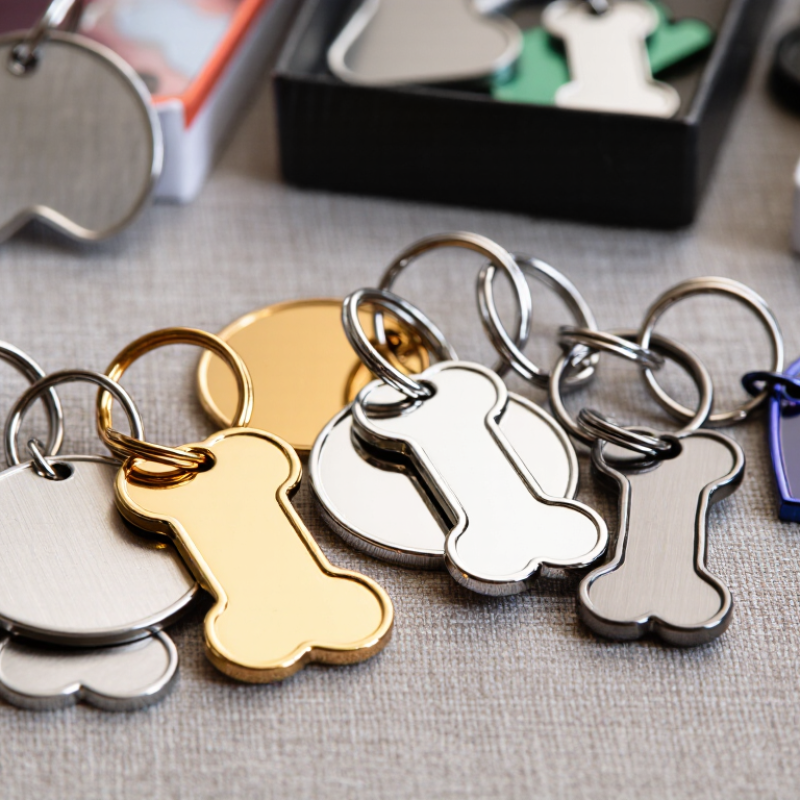
Pet ID tags from Chinese manufacturers range from stamped aluminum discs to stainless-steel plates, brass shapes, and soft silicone styles. Flat tags suit clear names and phone numbers; QR-code tags can hold more contact details, but they still need readable backup information. For engraving, laser marking creates crisp text on metal, while stamping or embossing can support larger production runs. Anodized aluminum offers color choices, though deep scratches may expose the base metal. No option is perfect.
The American Pet Products Association’s 2025 State of the Industry report estimates U.S. pet-sector spending reached $152 billion in 2024. This is not tag-specific data, but it reflects a sizable market for pet products. When comparing factories in China, buyers should request material specifications, sample tags, engraving tests, and checks for sharp edges. Also confirm attachment-ring strength and text legibility after rubbing and moisture exposure. Small details matter.
Tips: Send the supplier your actual font, tag size, and wording before sampling. Test a sample on a moving collar; tiny text can look fine on a screen but disappear on a curved tag. Ask for the production tolerance in writing. Some buyers overlook it.
When evaluating China’s pet ID tag suppliers, assess material consistency, engraving legibility, edge finishing, and production traceability. A 2009 Journal of the American Veterinary Medical Association study examined 7,704 microchipped animals; shelters reunited 52.2% of dogs and 38.5% of cats with their owners. Incorrect or missing contact details were common barriers. A clear, durable tag adds a practical identification layer. Ask suppliers for material declarations and test records, not just polished sample photos.
Check how each factory controls thickness, hole placement, and engraving depth across repeat orders. Request samples with fine text, then rub, bend, and expose them to moisture before approving a design. Compare quoted lead times, minimum order quantities, defect handling, and packaging; these details often reveal more than a low unit price. One limitation: a small sample cannot prove every production batch will match. Request batch inspection records and a written replacement process.
Tips: Put a test order through the full workflow. Confirm that phone numbers remain readable, corners feel smooth, and the split ring fits securely. Keep approved samples for comparison. No checklist is perfect.
Suggested weighting for comparing suppliers serving global buyers
The percentages are a proposed buyer-side evaluation framework, not measured ratings of specific suppliers. Assess product quality and compliance, customization options, production capacity, lead times, export experience, total cost, and communication using your own requirements and verified supplier documents.
China’s pet ID tag suppliers serve different needs, from simple stamped plates to customized designs. The ten profiles below describe common supplier capabilities, not a fixed ranking. A metal-stamping supplier suits high-volume orders. An engraving specialist offers clear names and phone numbers. A stainless-steel maker focuses on corrosion resistance. An aluminum supplier can provide lightweight tags in varied colors. A silicone workshop produces soft, quiet options.
A molded-plastic supplier supports bright shapes and low-cost runs. A reflective-tag producer helps improve visibility in dim light. A leather-focused supplier offers a softer, crafted appearance. A custom-shape supplier handles distinctive outlines and cutouts. An OEM/ODM supplier may coordinate design, packaging, and production. Capabilities vary, even among suppliers with similar product photos. Ask for recent samples and written specifications before comparing quotes.
Tips: Check engraving depth, edge smoothness, hole placement, and attachment strength. Request a sample with small text; it can reveal legibility problems that larger mockups hide. Confirm material details and production lead time in writing. A low unit price may not include mold charges, packaging, or inspection. Ask what happens when a batch differs from the approved sample.
The profiles below are anonymized sourcing archetypes, not verified rankings or records for specific companies. Locations indicate broad manufacturing or trading clusters; product options, minimum order quantities, lead times, and certifications must be confirmed directly with each supplier.
| Profile | Indicative Sourcing Cluster | Typical Product Focus | Common Materials & Processes | Customization Options | Indicative MOQ & Lead Time | Buyer Checks |
|---|---|---|---|---|---|---|
| Supplier Profile 1 | Yiwu, Zhejiang | High-volume, lightweight everyday pet ID tags | Aluminum; anodizing, stamping, and laser engraving | Shapes, colors, hole placement, two-sided engraving, retail packaging | Often quoted from 100–500 pieces per design; samples and production timing are order-dependent | Request engraving samples, coating-wear checks, and confirmation of legibility at the requested tag size. |
| Supplier Profile 2 | Dongguan, Guangdong | Custom metal tags for mid-range and premium product lines | Stainless steel or brass; laser marking, etching, polishing, and plating | Custom outlines, surface finishes, logos, serial details, and gift-box packaging | Often quoted from 100–300 pieces per design; lead time depends on finish and artwork approval | Confirm base-metal grade, plating specification, corrosion resistance, and finish consistency. |
| Supplier Profile 3 | Shenzhen, Guangdong | Precision-engraved tags and small custom production runs | Aluminum and stainless steel; CNC cutting, fiber-laser marking, and digital inspection | Fine text, QR-code artwork, bespoke shapes, and prototype revisions | Often quoted from 50–200 pieces per design; sample approval may affect the schedule | Test scan performance for codes, artwork accuracy, edge finishing, and data-handling requirements. |
| Supplier Profile 4 | Wenzhou, Zhejiang | Stamped and engraved metal tags for repeat wholesale orders | Brass, stainless steel, or aluminum; stamping, punching, and engraving | Standard and custom shapes, text layouts, metal finishes, and packed assortments | Often quoted from 300–1,000 pieces per design; tooling can affect initial order timing | Ask whether tooling is included, who owns custom dies, and how repeat batches are matched. |
| Supplier Profile 5 | Quanzhou, Fujian | Soft, flexible tags and accessory-style identification products | Silicone or molded polymer; embossing, debossing, and color filling | Custom colors, shapes, raised text, attachment holes, and multi-color designs | Often quoted from 500–1,000 pieces per design; mold development may add time and cost | Confirm material composition, odor, flexibility, color transfer, and mold ownership before ordering. |
| Supplier Profile 6 | Guangzhou, Guangdong | Fashion-led tags and coordinated pet accessory ranges | Aluminum, stainless steel, brass, and selected coated finishes; engraving and printing | Shape and finish combinations, color matching, product cards, and coordinated packaging | Often quoted from 100–500 pieces per design; packaging choices can extend lead time | Request physical samples to assess finish durability and verify packaging dimensions and labeling. |
| Supplier Profile 7 | Ningbo, Zhejiang | Export-oriented metal tag orders with consolidated accessory packaging | Stainless steel and aluminum; laser engraving, polishing, and assembly | Custom artwork, attachment rings, barcode labels, and carton configurations | Often quoted from 200–500 pieces per design; shipping schedule depends on order consolidation | Confirm carton counts, gross weight, packing list details, and the export documents available for the shipment. |
| Supplier Profile 8 | Xiamen, Fujian | Small-batch custom tags and design-development support | Aluminum, stainless steel, and molded materials; engraving, printing, or molding | Prototype shapes, custom artwork, sample revisions, and mixed design assortments | Often quoted from 50–300 pieces per design; custom sampling and tooling can affect timing | Agree on sample sign-off criteria, artwork file formats, revision limits, and production tolerances. |
| Supplier Profile 9 | Shanghai-area trading and export coordination | Multi-category sourcing and order coordination across product types | Materials and processes vary by production partner; commonly sourced options include engraved metal and molded polymer | Supplier consolidation, assortment planning, packaging coordination, and shipment support | MOQ and lead time depend on the factory and combined order; request a written, item-level quotation | Identify the actual manufacturer, clarify inspection responsibility, and verify who issues product and shipment documents. |
| Supplier Profile 10 | Qingdao, Shandong | General pet-accessory sourcing with tags included in broader orders | Metal or polymer tags sourced according to specification; process capability varies by producer | Mixed product assortments, private packaging, label placement, and order consolidation | Depends on product mix and production partner; confirm separate MOQs for each tag design | Check material declarations, sample-to-order consistency, inspection terms, and shipment documentation. |
MOQ and lead-time figures are indicative quotation ranges, not supplier-specific commitments. Before placing an order, confirm material specifications, engraving proof, sample approval, packaging requirements, inspection criteria, payment terms, and delivery terms in writing.
China’s pet ID tag suppliers differ most in material consistency, engraving quality, and production flexibility. Stainless steel resists corrosion, while anodized aluminum keeps tags light and supports many colors. Ask for a sample, then inspect its edges, finish, and engraved text under indoor light. Details decide durability.
Customization should cover shape, dimensions, attachment holes, and text layout—not just a logo or color. Request a digital proof and confirm whether both sides can be engraved. Small batches matter. Compare minimum order quantities for standard and custom designs separately; a low MOQ may apply only to stock shapes.
APPA’s 2024 State of the Industry report recorded $147 billion in U.S. pet-industry spending in 2023 and forecast $150.6 billion for 2024. This broad market figure is not tag-specific, but it signals sustained demand for pet products.
Lead-time quotes need careful reading. Ask suppliers to separate sample approval, production, and shipping days, and confirm when the clock starts. Get the schedule in writing, including holiday delays and remake terms for engraving errors. A polished quote can still hide vague timing. One imperfect detail often matters: a tiny font may look sharp on screen but become hard to read on a curved tag.
Choosing a China-based pet ID tag supplier starts with a clear product brief, not just a low quote. Specify the tag’s dimensions, material, edge finish, engraving depth, and attachment hardware. Request a production sample and inspect it under ordinary handling. Small details matter. Check whether the text remains legible after rubbing and whether the ring bends or opens too easily. One sample cannot guarantee that every batch will match.
Before ordering, ask how the supplier controls material consistency, engraving placement, and final inspection. Agree on measurable acceptance points, such as character alignment and surface defects, and keep an approved sample for comparison. Photos can help, but they may hide scratches or uneven edges. A checklist can still miss something; that is worth remembering. For larger orders, consider inspecting a randomly selected portion before shipment and recording any rejected pieces.
Export planning should begin before production ends. Confirm carton counts, package dimensions, gross weight, shipping marks, and the documents required for the destination. Product descriptions and material details should match across invoices and packing documents. Requirements can differ by market, so buyers should verify current import and labeling rules with a qualified customs adviser. Build time for document review and transit delays. A beautifully engraved tag is not useful if cartons arrive late or the shipment details need correction.
Stainless steel resists corrosion, while anodized aluminum is lightweight and available in many colors. Check the finish and engraved text under indoor light.
Request a sample with fine text. Rub it, bend it gently, and expose it to moisture. Check whether phone numbers remain readable.
Look for smooth corners, consistent thickness, accurate hole placement, and engraving that is easy to read. Small details matter.
No. A sample cannot prove every production batch will be consistent. Ask for batch inspection records and a written replacement process.
Ask about shapes, dimensions, attachment holes, text layout, and two-sided engraving. Request a digital proof before production.
Compare standard and custom designs separately. A low minimum may apply only to stock shapes, not your chosen design.
Ask for separate timelines for sample approval, production, and shipping. Confirm when the schedule starts, and get holiday delays and remake terms in writing.
Missing or incorrect contact details can make reunions harder. One study cited in the article reported that shelters reunited 52.2% of microchipped dogs and 38.5% of cats with their owners. A readable tag adds another practical identification layer, though it is not a perfect solution.
This guide explores the main Pet ID Tags available from Chinese manufacturers, including common materials, production methods, shapes, and customization options. It also outlines practical criteria for evaluating suppliers, such as manufacturing experience, communication, quality-control processes, minimum order quantities, and production capacity. Profiles of ten suppliers offer a structured starting point for comparing potential partners, while a side-by-side assessment highlights differences in materials, personalization, order requirements, and lead times.
For global buyers, successful sourcing involves more than comparing prices. The guide explains how to clarify specifications, request samples, check product consistency, and plan packaging and shipping. It also covers export considerations and supplier communication, helping buyers make informed decisions and reduce avoidable delays. Together, these topics provide a practical framework for identifying suitable suppliers and managing the purchasing process from initial inquiry through delivery.