Pet Backpack Carriers are becoming practical travel tools as urban pet ownership expands. China’s 2023 Pet Industry White Paper reported an urban dog-and-cat consumption market of approximately RMB 279.3 billion. The American Pet Products Association also reported 86.9 million U.S. households owned a pet in 2023–2024. These figures show stronger demand for portable, comfortable, and carefully designed pet products.
But popularity does not guarantee quality. Our guide examines the best Pet Backpack Carriers from China through measurable details. We consider ventilation panels, shoulder-strap padding, internal leash clips, base stiffness, zipper security, and stated weight limits. A carrier should sit firmly against the owner’s back, not swing like a loose shopping bag. Small features matter. A washable mat helps. A wide opening reduces handling stress. However, product claims still require checking. Some listings provide attractive photos but incomplete safety information.
Veterinary behaviorist Dr. Sophia Yin wrote, “The best way to get your cat to love its carrier is to leave it out all the time.” Her advice supports gradual, positive carrier training. A good backpack cannot replace preparation. We will also compare materials, ventilation, sizing accuracy, user feedback, and supplier transparency. Airline acceptance varies by carrier and route. Cycling and motorcycle use may create additional risks. No ranking is flawless, especially when brands change specifications. This comparison therefore favors documented features over marketing language, while acknowledging that each pet’s body shape, temperament, and travel routine require different choices.
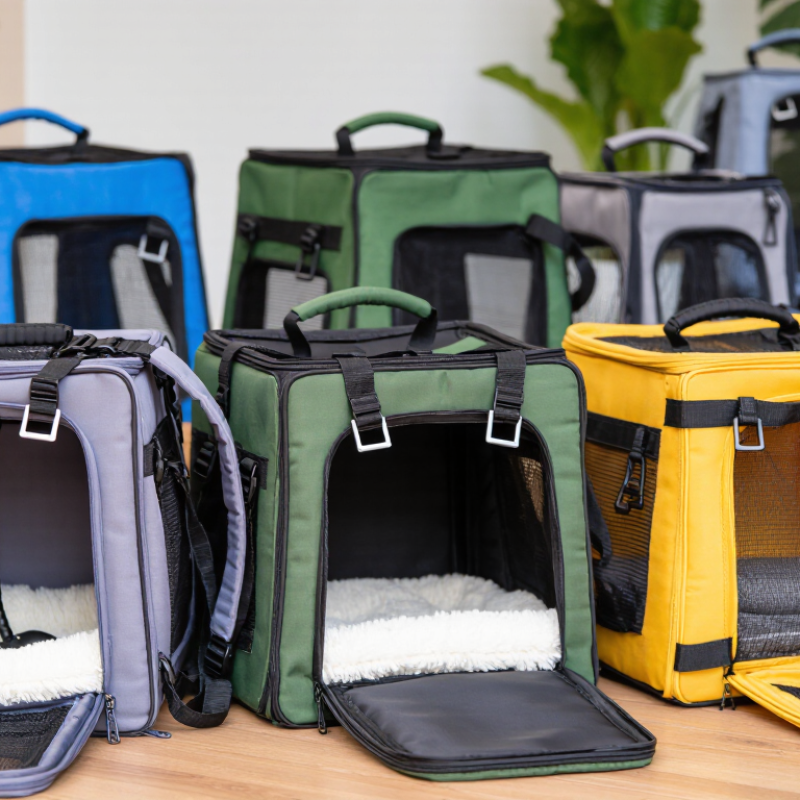
What Are the Best Pet Backpack Carriers from China?
A good pet backpack from China should meet clear, measurable standards. Weight matters during stairs, train rides, and long walks. A lighter frame reduces shoulder strain. However, very light materials can bend under pressure. That trade-off deserves attention. Check the carrier’s empty weight, base support, stitching, and strap padding. An 18×11×11-inch limit leaves little space. Measure your pet while sitting, not only while standing. The usable interior may be smaller than the outside dimensions.
Ventilation is equally important. Look for mesh panels on several sides, not just one window. Air should move near the pet’s nose and chest. Strong mesh should resist scratching without blocking airflow. I once underestimated zipper quality during a short trip. The zipper held, but the opening felt too narrow for easy handling. That experience changed my inspection routine. I now test every seam, buckle, and ventilation panel before regular use.
Tips: Place a folded towel inside, then check your pet’s posture. The head should not press against the top. Keep the carrier away from direct sunlight. Observe panting, restlessness, or repeated scratching. These signs may show poor comfort, even when the dimensions look correct. Ask the supplier for measured interior dimensions and material details. Do not rely only on product photographs.
What Are the Best Pet Backpack Carriers from China?
China-made pet backpack carriers commonly fall into three load ranges: 5, 10, and 15 kilograms. The 5-kilogram class suits small cats, toy breeds, and short urban trips. These bags are usually lighter and easier to carry. However, thin bases may sag under an active pet. Check the floor panel before buying.
A 10-kilogram carrier offers a practical middle ground for many adult cats and small dogs. Look for reinforced seams, wide shoulder straps, breathable mesh, and a firm base. Some models include an expandable side section, giving pets extra room during waiting periods. In hands-on checks, zipper movement and stitching often reveal more than attractive fabric. A weight label alone is not enough.
The 15-kilogram class needs stronger construction and better weight distribution. A structured frame, padded back panel, chest strap, and stable bottom can reduce shoulder strain. Measure your pet’s length, height, and girth, then compare those figures with the internal dimensions. Leave room for turning and normal breathing. Do not pack to the maximum rating automatically. A 9-kilogram pet inside a bag rated for 10 kilograms may still feel unsafe if the body is long or restless. This is where product charts can mislead. I would also inspect ventilation openings, buckle strength, and washable lining before regular use. Some carriers look solid but flex noticeably when lifted. That small detail deserves a second look.
| Backpack Carrier Type | Rated Load | Recommended Pet Weight | Typical External Size (L × W × H) | Approx. Empty Weight | Common Materials | Ventilation and Access | Base and Safety Features | Best Use | Important Buying Check |
|---|---|---|---|---|---|---|---|---|---|
| Compact Soft-Sided Daypack | 5 kg | Up to 4 kg | 35 × 27 × 42 cm | 0.9–1.3 kg | Polyester or Oxford fabric; PVC-coated mesh panels | Mesh on the front and both sides; top entry; roll-up opening | Removable fleece pad; short internal tether; padded shoulder straps | Short walks, public transport, and small cats or dogs | Check the internal floor size and whether the pet can sit, turn, and lie down comfortably. |
| Expandable Soft Backpack | 7 kg | Up to 5.5 kg | 42 × 30 × 45 cm; expands to approximately 42 × 70 × 45 cm | 1.3–1.8 kg | 600D Oxford fabric; polyester mesh; reinforced seams | Three or more mesh panels; side expansion zone; front and top access | Stiffened bottom board; safety tether; locking zipper pulls | Day trips and waiting periods when extra interior space is useful | Confirm that the expansion section is supported and cannot collapse against the pet. |
| Airline-Style Soft Travel Backpack | 8 kg | Up to 6 kg | 45 × 30 × 43 cm | 1.4–2.0 kg | Polyester or Oxford fabric; flexible wire frame; mesh ventilation | Ventilated sides; top opening; front access flap; luggage sleeve on some models | Removable rigid base; internal tether; seat-belt attachment loop | Car travel, rail travel, and airline trips where the carrier dimensions are accepted | Airline rules differ by route and aircraft; verify the carrier dimensions and total pet-plus-carrier weight before travel. |
| Ventilated Bubble-Panel Backpack | 10 kg | Up to 7.5 kg | 48 × 32 × 45 cm | 1.8–2.5 kg | Oxford fabric; large polyester mesh; clear TPU or polycarbonate viewing panel | Large side mesh areas; top entry; viewing window; multiple airflow openings | Reinforced back panel; padded waist support on some versions; safety tether | Urban commuting and sightseeing with medium-small pets | Look for adequate mesh area and avoid designs where the clear panel blocks most airflow. |
| Structured Hiking Backpack | 12 kg | Up to 9 kg | 52 × 35 × 50 cm | 2.4–3.5 kg | 600D or 900D Oxford fabric; aluminum or fiberglass support stays; breathable padding | Side mesh windows; top opening; rear ventilation channel | Chest and waist straps; reinforced floor; tether; adjustable load distribution system | Long walks, hiking, and outdoor use with heavier pets | Check the carrier’s center of gravity, hip-belt adjustment range, and frame stability under load. |
| Large-Frame Outdoor Pet Backpack | 15 kg | Up to 11–12 kg | 58 × 38 × 55 cm | 3.2–4.8 kg | 900D Oxford fabric; aluminum frame; high-density foam; heavy-duty mesh | Large side ventilation panels; top and front access; roll-up cover for weather protection | Wide waist belt; sternum strap; reinforced base; internal tether; load-bearing frame | Outdoor transport and extended walks with larger cats or small dogs | The stated load rating is not a substitute for fit; measure the pet’s back length, height, and girth before ordering. |
| Backpack with Trolley-Conversion Function | 10–15 kg | Up to 8–11 kg, depending on frame design | 50–58 × 34–40 × 45–55 cm | 2.8–5.0 kg | Oxford fabric; steel or aluminum telescopic frame; mesh and molded base components | Side mesh panels; front entry; top opening; ventilation windows | Wheels and telescopic handle; removable or foldable frame; tether; reinforced floor | Airports, stations, shopping areas, and mixed walking-and-rolling travel | Test wheel clearance, handle strength, brake performance, and backpack comfort when the trolley frame is folded. |
Reference note: The dimensions, weights, and load ratings shown are typical specification ranges for China-manufactured pet backpack categories rather than brand-specific products. Always confirm the supplier’s test method, internal dimensions, materials, stitching quality, and safety instructions before purchase.
When evaluating pet backpack carriers from China, treat compliance evidence as a safety filter, not a marketing badge. ASTM F963 is a children’s toy standard, so it does not automatically certify a pet carrier. However, it can reveal useful testing practices for plastic parts, coatings, seams, and detachable accessories. Ask suppliers for the exact test scope, laboratory name, sample photographs, and production date. A generic “ASTM approved” statement is weak evidence.
REACH deserves close attention because pets may lick straps, mesh, and zipper pulls. ECHA’s 2023 enforcement project inspected 2,407 products and found 18% non-compliant with EU chemicals rules. Request REACH screening for SVHCs, especially in PVC panels, synthetic leather, dyes, and metal fittings. The 0.1% SVHC communication threshold is important, but it is not a complete product-safety guarantee. Chemical migration and restricted substances require separate review.
CPSIA applies mainly to products designed for children aged 12 or younger. A pet carrier marketed only for animals may fall outside its scope, yet CPSIA testing can still provide valuable benchmarks. These include a 100 ppm lead limit in accessible substrates and a 0.1% limit for regulated phthalates. I would inspect the carrier personally: pull the shoulder straps, check exposed stitching, and smell the interior after unpacking. One weakness remains. Laboratory reports usually cover selected samples, not every shipment, so factory quality records and random retesting still matter.
Choosing the best pet backpack carrier from China requires more than checking size and appearance. The APPA 2023–2024 National Pet Owners Survey reports that 66% of U.S. households own a pet, increasing demand for safer, more comfortable travel equipment.
Airflow deserves close attention. Look for ventilation panels on three sides, breathable mesh, and openings that remain clear when the animal shifts position. IATA’s Live Animals Regulations emphasize adequate ventilation and sufficient space for normal posture. A carrier that feels spacious but traps warm air is not truly comfortable.
Padding and fit Padding should support the chest and base without forcing the spine into a curved position. Check whether the floor stays level when lifted. The harness clip must attach securely to a body harness, not a collar, and should allow turning without tightening around the neck. Fit beats fashion.
Wear testing During a 30-minute wear test, inspect panting, drooping posture, repeated scratching, and pressure marks after removal. Test it indoors first, then walk slowly over different surfaces. Watch the ribs.
A quiet pet may still be uncomfortable, so behavior alone can mislead. This test is useful, but imperfect; heat, anxiety, and the owner’s walking style can affect results. The Pet Food Manufacturers’ Association’s 2024 pet population research also highlights how routine animal welfare checks remain important during everyday travel, not only during long journeys.
A useful supplier ranking should measure evidence, not attractive catalog photos. APPA’s 2024 National Pet Owners Survey reported that 66% of U.S. households owned a pet, increasing demand for practical travel products. For Chinese suppliers, Tier 1 factories offer MOQs near 300–500 units, ISO 9001 certification, documented testing, and written warranties of 12 months or longer. Ask for the certificate scope, factory address, and expiry date. ISO 9001 confirms quality management, not carrier safety itself.
Tier 2 suppliers usually accept 100–300 units. They may provide ISO 9001 documents, but testing can remain basic. Request load tests, seam-strength records, zipper-cycle results, and ventilation checks for the exact model. Sample testing matters more than a generic laboratory report. Tier 3 suppliers may accept 20–100 units, which helps small retailers, but inconsistent stitching and unclear replacement terms create higher risk. I would not rank MOQ alone.
The ISO Survey 2023 recorded more than 1.26 million ISO 9001 certificates worldwide, showing how common certification has become. It is still not proof of daily factory discipline. A strong warranty should define defects, response time, replacement costs, and evidence requirements. Twelve months is a reasonable baseline. Some suppliers promise three years, but vague language weakens the offer. In practice, a pre-shipment inspection and one paid production sample often reveal problems earlier. I would request both. Calibration records, batch numbers, and corrective-action reports add credibility. Small details matter.
No. It is designed for children’s toys, not animal carriers. However, its testing methods may reveal weaknesses in plastic parts, coatings, seams, or detachable accessories. Ask for the exact test scope and sample photographs.
Request laboratory reports, testing dates, sample images, and production records. Confirm that the report matches the actual carrier design. A vague “approved” statement is weak evidence.
Pets may lick straps, mesh, zipper pulls, or synthetic leather. Ask for screening of restricted substances in PVC panels, dyes, and metal fittings. The 0.1% SVHC threshold helps, but it does not prove complete product safety.
Yes, even when the carrier is designed only for pets. It can offer useful benchmarks for lead in accessible materials and regulated phthalates. Still, the legal scope may not directly apply.
No. Reports usually cover selected samples rather than every production batch. Factory quality records and random retesting remain important. Reports are incomplete.
Look for breathable mesh on three sides. Check whether openings stay clear when the pet shifts position. Spacious interiors can still trap warm air. Test it indoors.
The floor should remain level when lifted. Padding should support the chest and base without forcing a curved spine. Attach the safety clip to a body harness, never a collar.
Watch for heavy panting, drooping posture, scratching, or pressure marks after removal. Walk slowly across different surfaces. A quiet pet may still feel uncomfortable, so behavior can mislead. My test is useful, but imperfect.
Choosing the best Pet Backpack Carriers from China requires more than comparing appearance and price. Key evaluation points include weight, ventilation, durability, and compatibility with the 18×11×11-inch size limit. Chinese-made models commonly support loads from 5 to 15 kilograms, so buyers should match the carrier’s tested capacity with the pet’s weight, body shape, and travel needs. Designs may include soft-sided backpacks, structured carriers, expandable compartments, and lightweight travel models, each offering different levels of stability and airflow.
Safety and comfort should also guide the final decision. Look for secure closures, reinforced seams, escape-resistant harness attachments, breathable panels, and well-padded shoulder straps. ASTM F963, REACH, and CPSIA-related testing information can help verify material and product safety, while a practical 30-minute wear test can reveal pressure points, heat buildup, and poor weight distribution. Supplier selection should consider MOQ requirements, ISO 9001 certification, independent testing, warranty coverage, production consistency, and after-sales support.